
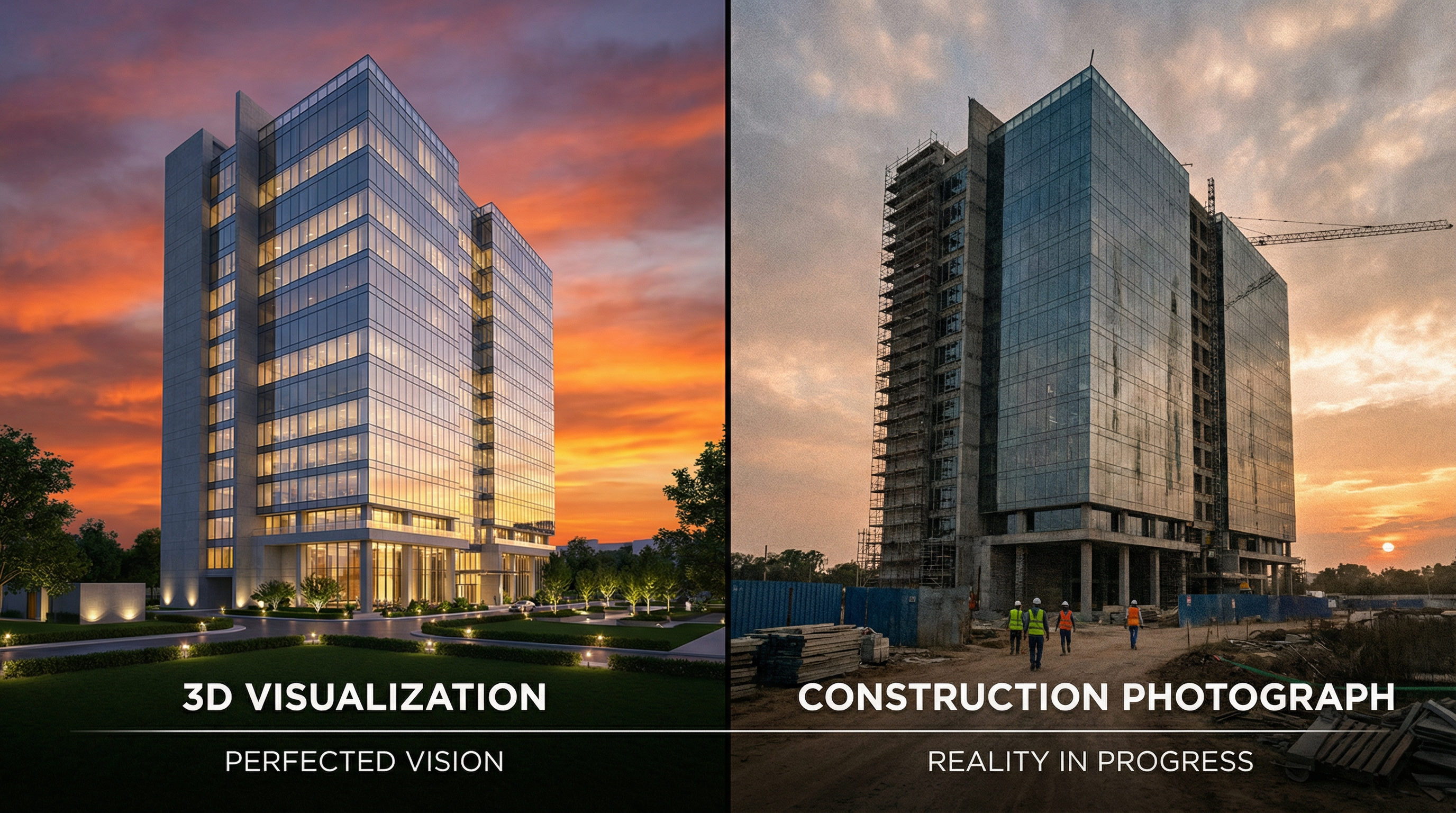
For decades, traditional photography was the gold standard for showcasing real estate and architectural projects. But with the rapid advancement of 3D rendering technology, the industry is experiencing a paradigm shift. Is 3D rendering finally better than traditional photography?
The Case for 3D Rendering
The biggest advantage of 3D rendering is control. You don't have to wait for the perfect weather, the right time of day, or for construction to be completed. You can visualize a project months or even years before ground is broken.
- Total Control: Adjust lighting, materials, and furniture instantly.
- Pre-Selling: Market and sell properties before they exist.
- Cost-Effective: Often cheaper than staging a physical space and hiring a professional photographer.
The Case for Traditional Photography
Traditional photography still holds value, particularly for completed projects where authenticity is paramount. However, even then, photos are often heavily edited to achieve the desired look.
The Verdict
For unbuilt projects, 3D rendering is the undisputed champion. For completed projects, a hybrid approach—using traditional photography enhanced with 3D elements (like virtual staging)—often yields the best results.